Instagram can’t tell who made it either
Instagram won’t cut AI content’s reach just for being AI, and admits ranking makes mistakes. X now credits the original author when a photo is shared. Proving who made it is the creator’s job.
On this page
TL;DR
Platforms used to ask, “Is this AI?” Now they ask, “Do people want it, and who made it?”
Instagram’s Adam Mosseri says the app does “not throttle the reach of AI content just for being AI content,” and admits ranking makes “some mistakes.”
Before you post, ask yourself: “If someone copied this tomorrow, could I prove it was mine?”
Open the comments under almost any viral sketch or dance clip on Instagram this month and the same argument is running. One person says it’s AI. Another says it was stolen. Someone tags the account they think made it first. Nobody seems sure, and the app doesn’t seem sure either.
Instagram has now said so out loud.
What Mosseri said
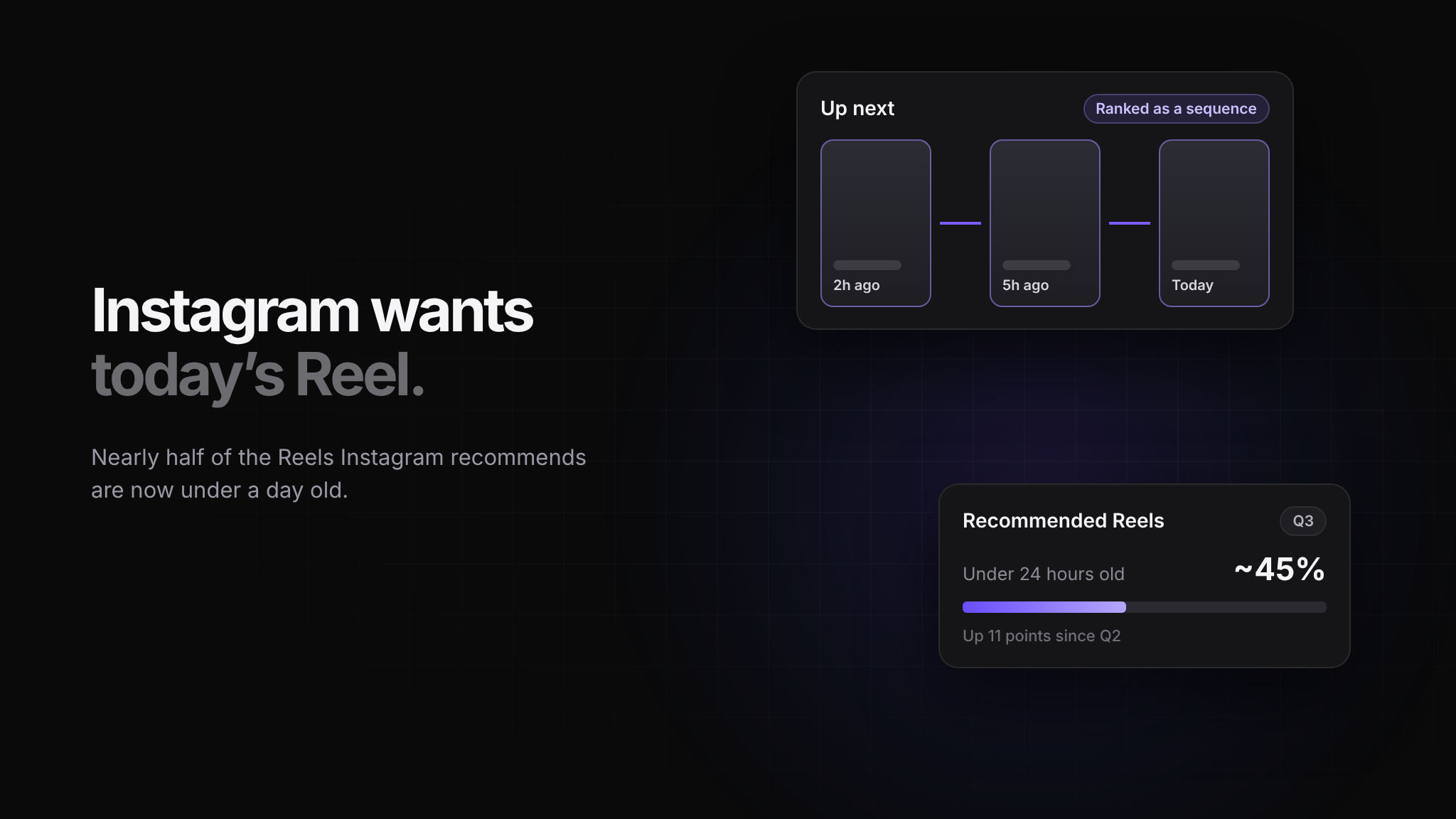
In his weekly Q&A, Mosseri said: “We do not throttle the reach of AI content just for being AI content. Our idea with ranking is to connect you with content that you like and not with content that you’re not interested in, whether or not it’s AI.” He added that “there’s a lot of slop out there,” that ranking is meant to deal with it, and that “obviously we make some mistakes sometimes.” Instagram says it wants more AI labels and wants to give creators a reason to tag their own AI posts.
On AI copies of artists’ work he went further, writing on Threads: “To be clear, I am very worried about this trend.” Copyright claims, he said, are “not enough though, as assume many comedians and dancers haven’t gone through the trouble to copyright their material.” Any fix also has to stop bad actors filing fake claims, which he says “happens all the time.”
Read that together and the position is plain. Instagram isn’t judging whether something was made with AI. It’s judging whether people want to watch it, and it can’t reliably tell who made it first.
Everyone is using it anyway
YouTube’s Culture and Trends team ran a survey with NRG of 694 US “video posters,” people who had uploaded video in the past year. Of those, 72% said they use AI on videos or images, and 61% said they were interested in using AI to put themselves into their content. YouTube commissioned the study and is selling AI tools, so treat it as a direction rather than a census.
Still, the direction matters. When most people posting video use AI somewhere, “Is this AI?” stops being a useful question. What’s left is the one Mosseri can’t answer at scale: whose idea was it?
X built the credit into the button
X tried a different fix this week. Its Creators account announced photo resharing on 27 October: “See a photo you want to share? Long press it and tap Post photo. The original author gets credit, and you both earn from Original Content Rewards.” The shared image carries a link back to the original account, and Social Media Today reports that engagement on it counts toward impressions for both.
Until now, posts with duplicated images weren’t eligible for X’s payouts at all. The limits are real. Earning still needs X Premium, 500 verified followers and 500,000 verified Home Timeline impressions in 90 days, and X hasn’t published how the money splits between the two accounts. But the design choice is the interesting part. Instead of guessing who made something after it spreads, X records it at the moment it spreads.
Provenance is your job now
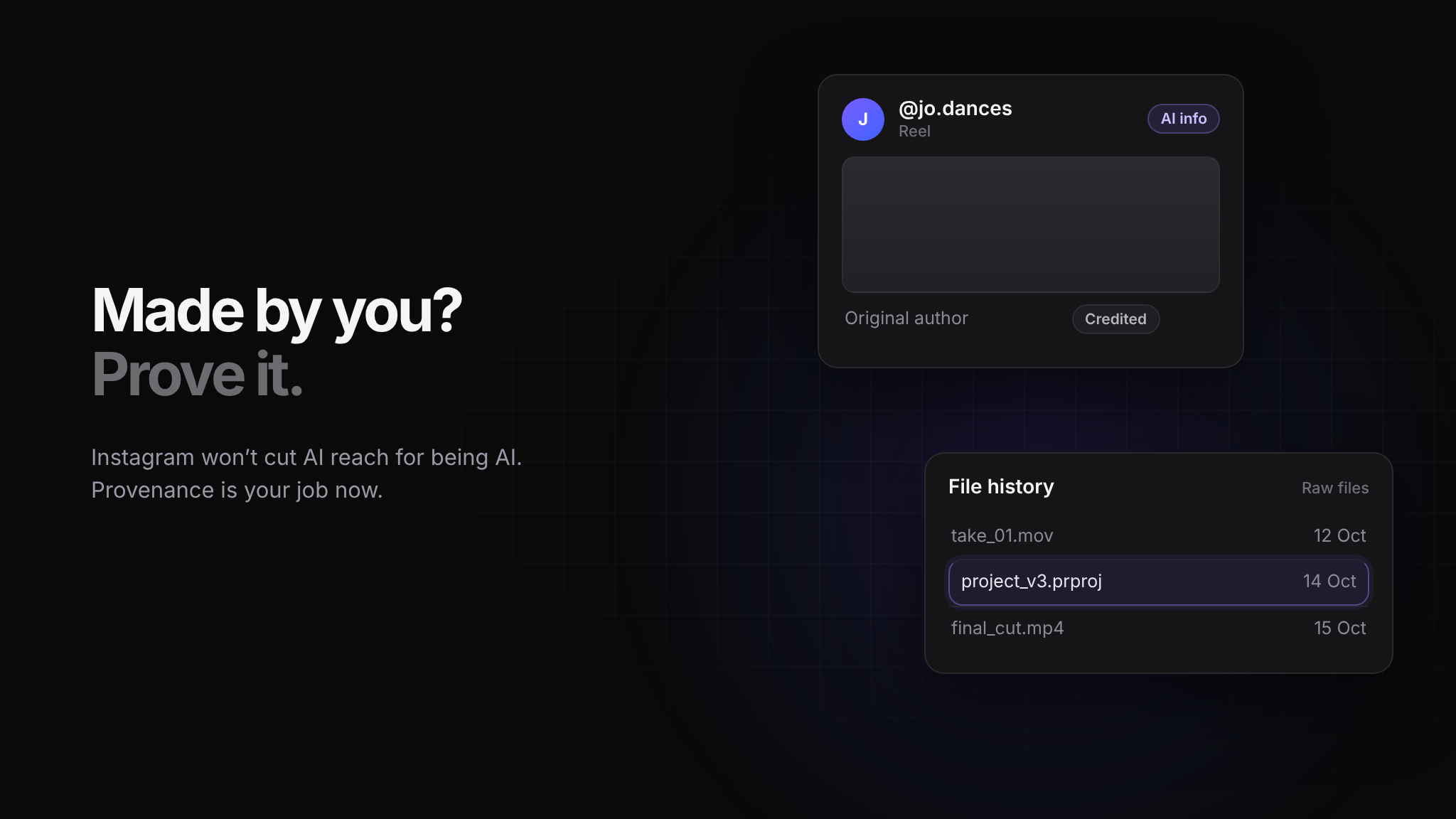
Instagram will keep adding labels, and some of them will get things wrong. Until the tools catch up, the creator who can show the work holds the stronger hand. Raw files with dates, early drafts, behind-the-scenes clips and a face, voice or place that’s hard to fake all do what the app can’t. They answer “who made this?” before anyone asks.
Disclosure works the same way. Creators who label their own AI-assisted posts are telling the audience how the thing was made. Creators who wait for a platform label let the platform tell that story for them, mistakes included.
Sources: Social Media Today: Instagram chief says stronger AI slop prevention is needed (19 Oct 2026) · Tubefilter: YouTube publishes study to show that creators love using AI (22 Oct 2026) · YouTube Blog: generative video and personal creativity report · Social Media Today: X lets users share credit on reposted images (28 Oct 2026) · The Daily Vantage: X photo resharing, who earns when you repost an image (29 Oct 2026)