Strategy
Nobody is searching for follower counts anymore
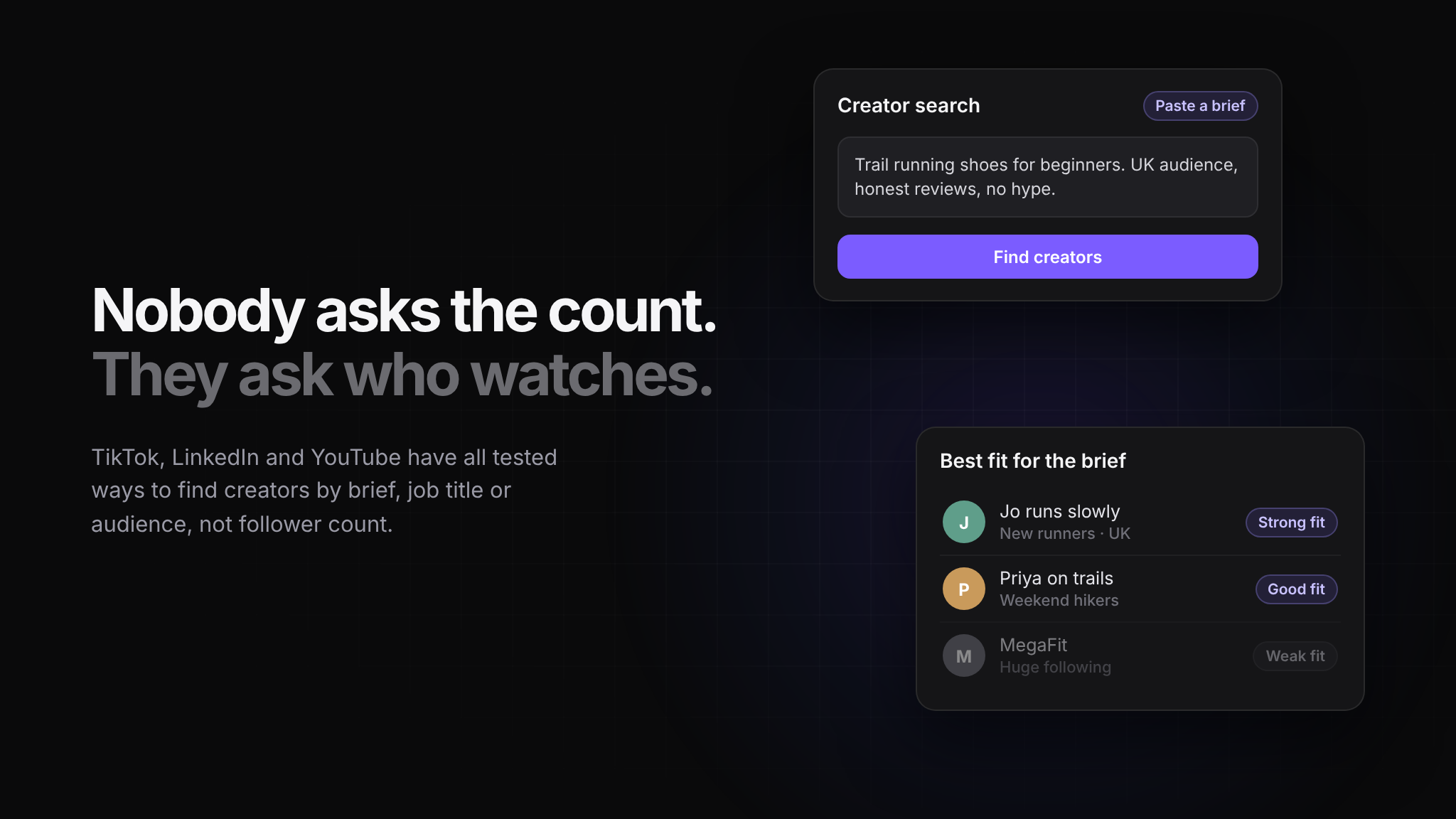
TikTok, LinkedIn and YouTube have tested ways to find creators by brief, job title or audience. Follower count is no longer the first column.
On this page
TL;DR
The old shortlist asked, “How many people follow them?” The new search asks, “Who exactly is watching?”
TikTok, LinkedIn and YouTube have all tested tools that let brands find creators by brief, job title or audience, not just follower count.
Before you build the next shortlist, ask yourself: “Do I know who watches them, or just how many?”
Watch a brand team build a creator shortlist and the first column on the spreadsheet is almost always followers. It is the easiest number to find and the easiest to defend in a meeting. It also says very little about whether the right people are watching.
Three platforms have spent the past few weeks building search tools that start somewhere else.
TikTok lets you paste the brief
TikTok One, the platform's hub for brand and creator deals, now has Creator AI Search. Instead of ticking filters, a marketer pastes in a campaign brief or describes what they want in plain language, and the tool returns a curated set of creators. TikTok says it ranks them on signals like content quality, reach and how well past brand partnerships performed. It is a global beta, and access goes through a TikTok rep.
Reach is still on that list. What changed is the starting point. The brief is now the query, so the words in it decide who comes back.
LinkedIn filters by job title
On 30 September LinkedIn opened a Creator Discovery beta inside its Creator Marketplace. The new filters cover content type, the creator's industry and job function, audience demographics and whether they are a Top Voice. General availability is expected in early 2027.
For a B2B brand this is the useful bit. Take a payroll software company. It does not need the biggest creator on LinkedIn. It needs the finance lead whose posts are read by other finance leads, and that is now something you can search for rather than guess.
YouTube tried it and pulled back
In early October the growth tool vidIQ posted a screenshot of a Studio tab YouTube calls Channel Search. It let a small number of brand channels look up creators and see audience numbers such as unique viewers, watch time, age, gender and top countries. YouTube told Tubefilter the data came from creators who had opted in through its partnership tools. When a non-brand account got access by mistake, YouTube rolled the test back. It may not return in this form.
The retreat is telling too. Platforms do not test showing brands who watches a channel unless brands keep asking.
Being big is not the same as being findable
Put the three together and a pattern appears. The creators who get surfaced are the ones a search can describe: who watches, what those people do for a living, where they live, what the creator makes. Creators with a million followers and a vague niche are hard to match to any brief. One with forty thousand UK nurses watching is easy.
That shifts work onto both sides. Brands get better results from briefs written like a search, naming the audience, the role, the country and the format, and from shortlists judged on audience fit and past partnership results before follower count. On LinkedIn, the beta is the moment to put the right subject experts forward.
Creators have a quieter job. Tidy the niche until it fits in a sentence, opt into the partnership programmes where the data is shared, and pitch in the language a brief would use. If a brand would search for "UK skincare for over-40s", the bio and the pitch should say that.
The follower count has not disappeared from the spreadsheet. It just moved a few columns to the right.