YouTube
Views stopped being the argument
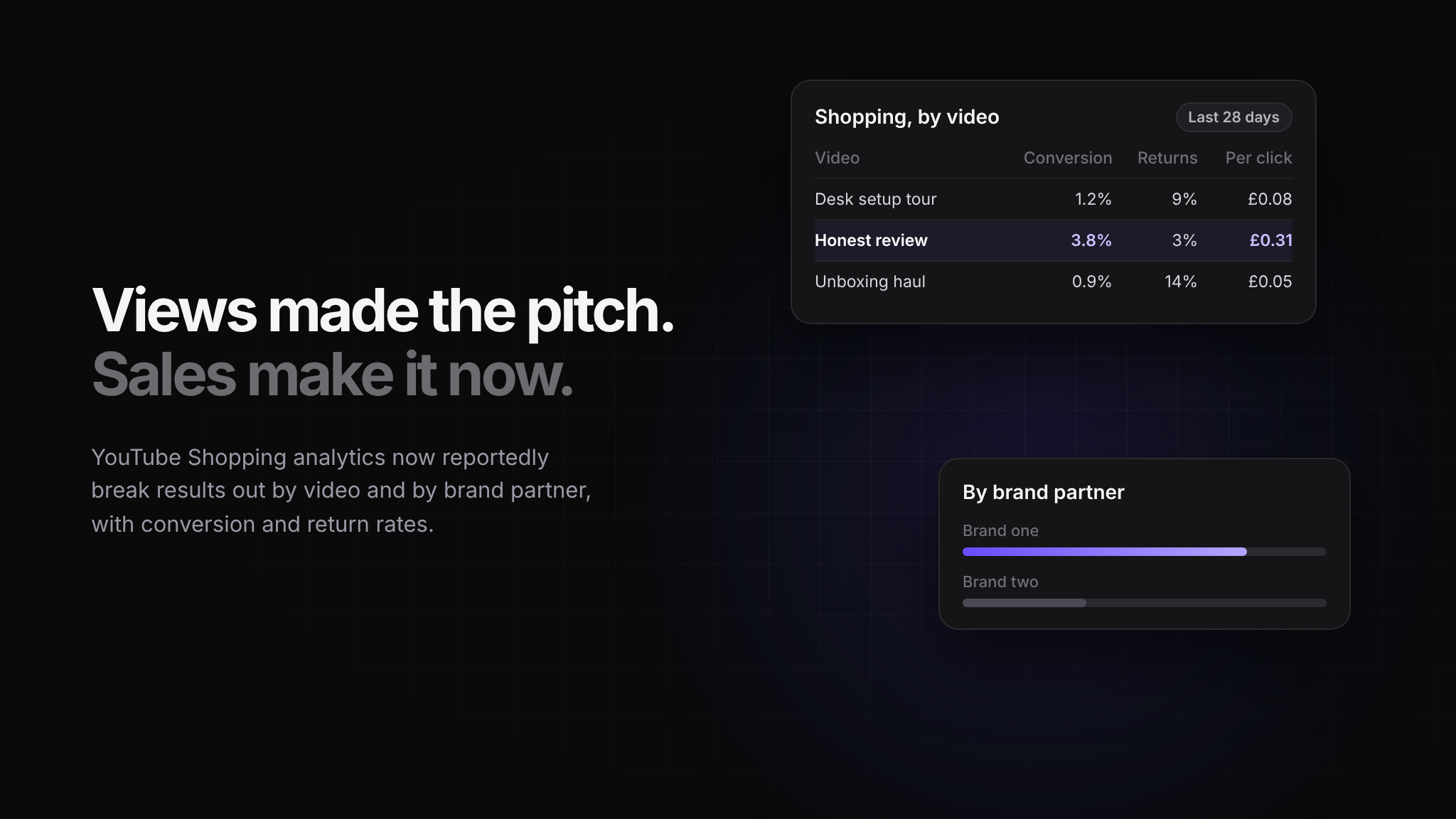
YouTube Shopping analytics now show which video sold and which brand partner converts. View counts make a weaker renewal pitch.
On this page
TL;DR
Views say, “Plenty of people watched.” Conversion rates say, “Here’s what they bought.”
YouTube Shopping analytics now reportedly break results out by video and by brand partner, with conversion rate, return rate and earnings per click.
Before your next renewal pitch, ask yourself: “Which of my videos actually sold, and what came back?”
Ask a creator why a brand should renew and you will usually hear a view count. It is the biggest number on the dashboard, so it is the number that ends up in the pitch deck. This month, three platforms quietly made it a weaker argument.
YouTube started showing which video sold
YouTube has upgraded its Shopping analytics. Product clicks and impressions now refresh daily, earnings include eligible extra items bought in the same shopping session, and advanced analytics in Studio on the web break results out by video and by brand partner, with conversion rate, return rate and earnings per click.
That last part matters more than it looks. Creators with three sponsored videos used to know which one was watched most. Now they can see which one sold, which one sold things people sent back, and which brand's products convert for their audience at all.
Brands are being handed a similar view
On 8 October Tubefilter reported a YouTube Studio test called Channel Search, which let a small number of brand channels look up opted-in creators and see unique viewers, watch time, audience age and gender, and top countries. YouTube says the test was limited to brand channels and rolled back after one non-brand account got access by mistake. It may never ship. It does show which way Studio is pointing.
LinkedIn moved the same way on 15 October, adding search filters to its Creator Marketplace so brands can find creators by audience focus, expertise and preferred formats, next to a refreshed profile insights dashboard. On TikTok, GMV Max now counts affiliate commissions and coupons when it works out a seller's return, so a seller can see what a creator's video earned them after the creator was paid.
The pay is moving the same way. This week YouTube Shopping added affiliate campaigns that pay a flat fee or bonus on top of commission, with brand briefs listed in the Studio Shopping Hub. The terms are plain: tag the product, use the format asked for, keep the video public for 30 days. The flat fee buys the attention. The commission is the brand quietly checking whether the attention bought anything.
The number in the room changes
Put those together and the brand-deal conversation shifts. The brand will increasingly arrive already knowing who watches you. What it will not know, unless you tell it, is what happened after they watched.
Part of that answer is already in front of some brands. Any merchant in the YouTube Shopping affiliate program can open Merchant Center and see how each creator's videos sold its products, conversion rate included. What it cannot see is the comparison: how its products sell next to everything else you tag, and which of your formats sells at all. That part sits in your Studio, not theirs. The creator who walks into a renewal and says the knife video drove most of your clicks, converted above my channel average and hardly anything came back is having a different conversation from one who points at the view count.
There is a reason this lands beyond the arithmetic. View counts ask the brand to imagine the sale. Conversion rates let it skip the imagining. Most buyers will pay more for a smaller number they trust than for a bigger one they have to believe.
What it looks like on a real channel
Take a cookware reviewer with a viral pan video and a quiet knife video. The pan video has the views. Open the per-video breakdown and the knife video may well have the better earnings per click and fewer returns, because people who sit through eight minutes about knives have mostly decided to buy one. That is the video to pitch the knife brand on, and the format worth making more of.
The habit is small. Once a month, sort your shoppable videos by earnings per click instead of views, and check the return rate before you promote a product again. Treat the newest figures as provisional, since YouTube's own help pages say estimated earnings can move for two to three months while returns and merchant checks settle. Then look at what your YouTube Creator Partnerships and LinkedIn Creator Marketplace profiles show a brand, because more and more, that page is the first pitch.
Views told brands you could get attention. The new dashboards tell them, and you, what the attention did. The creators who learn to read the second number first will be the ones setting the price.
Sources
Creator Weekly: YouTube Shopping Analytics upgrade (10 Oct 2026)
Tubefilter: A YouTube test brought creator analytics into brands' Studio dashboards (8 Oct 2026)
Social Media Today: LinkedIn adds new creator monetization options (15 Oct 2026)
Uppbeat: YouTube and TikTok are giving brands new ways to find your content (15 Oct 2026)
Google Merchant Center Help: About analytics in the YouTube Shopping affiliate program
Creator Weekly: YouTube Shopping affiliate campaigns with flat fees (17 Oct 2026)